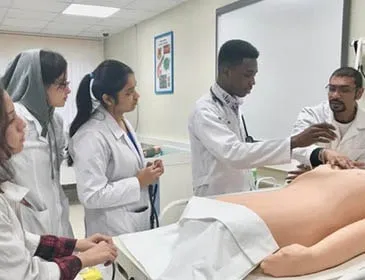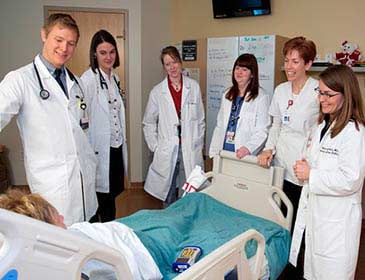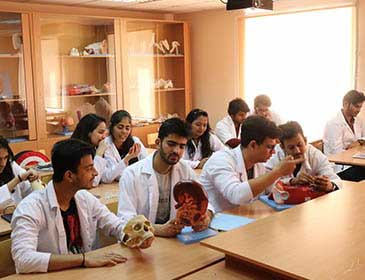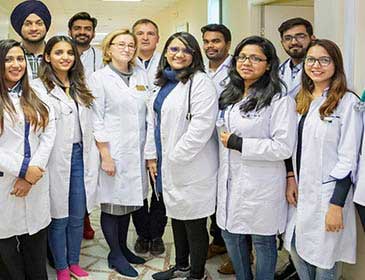
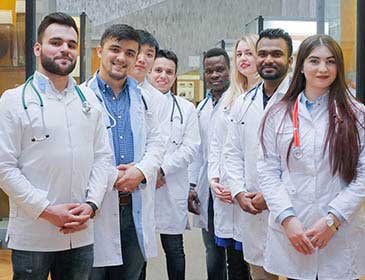

MBBS in Russia gives Indian students access to medical education at Russian universities with General Medicine programs and English-medium options at several institutions. Russian universities use the term General Medicine/Medicine rather than “MBBS.”
MBBS in Russia for Indian students can offer a comparatively affordable route, with the total cost ranging from Rs. 33.78–Rs. 86.82 lakh depending on the university, city, accommodation, and living expenses. The MBBS duration in Russia generally spans 6 years, with 5 years of academic and clinical education followed by 1 year of mandatory clinical training or internship, depending on the university and applicable regulations.
Indian students generally need 50% in Physics, Chemistry, and Biology in Class 12 for the general category and 40% for reserved categories, subject to current eligibility rules. They also need a qualifying NEET score.
| Factor | Details |
|---|---|
| Country | Russia |
| Program | General Medicine / Medicine (equivalent to MBBS in Russia) |
| Duration | 6 years |
| Medium | English or Russian, depending on the university |
| Universities | 155 |
| Average Cost | Rub 220,000 per year |
| NEET | Required for Indian medical applicants |
| Eligibility | University-specific; Indian students must meet applicable NMC requirements |
| Annual Tuition Fees | Rs. 2.71 to Rs. 7.45 lakhs (varies by university) |
| Clinical Training | Included in medical programs |
| Popular Cities | Kazan, Kaliningrad, Makhachkala, Moscow and others |
| Recognition of Medical Universities |
|
Indian students consider MBBS in Russia because Russian universities offer medical programs in English, established clinical training, and different tuition options, a large international student community, advanced infrastructure, and comfortable accommodation options.
Russia MBBS fees vary significantly between universities offering MBBS in Russia. Current university fee schedules show different tuition levels across medical programs. For example, Kazan Federal University lists Rs. 653,400 per year for its English-medium General Medicine program, while Crimea Federal University lists Rs. 344,000 per year, and Bashkir State Medical University lists Rs. 405,660 per year for General Medicine. This variation lets students compare universities according to their budgets.
Students who wish to study MBBS in Russia can find English-medium medical programs at several Russian universities. For example, Kazan Federal University offers General Medicine in English, while Crimea Federal University and Bashkir State Medical University also attract international students through their medical programs.
Russia's official Study in Russia portal reports more than 4 million university students, including more than 422,000 foreign citizens. The portal also ranks Russia fifth globally by international student numbers, based on its cited UNESCO ranking.This international environment can help Indian students pursuing MBBS in Russia interact with classmates from different countries and experience a multicultural campus environment.
Russian medical universities combine scientific education with practical and clinical training for their MBBS in Russia program. Kazan Federal University, for example, highlights clinical work experience and scientific research within its General Medicine program. Such an English-medium program includes practical experience and competencies for diagnosis, treatment, prevention, and primary healthcare.
Students who want to pursue MBBS in Russia can have access to modern clinical bases, laboratories, teaching facilities, dormitories, and student services. These facilities can assist students a lot in gaining quality education as well as advanced practical skills.
Several medical universities providing MBBS in Russia have recorded varying FMGE pass rates across different examination sessions. For example, Kazan State Medical University recorded a 40% pass rate in the 2025 FMGE data. Students should evaluate university-level FMGE performance across multiple years rather than relying on a single examination session.
| University | Candidates Appeared | Passed | FMGE Pass Rate |
|---|---|---|---|
| Kazan Federal University – Institute of Fundamental Medicine and Biology | 5 | 2 | 40.00% |
| Crimean Federal University named after V. I. Vernadsky | 93 | 19 | 20.43% |
| Bashkir State Medical University | 128 | 28 | 21.88% |
| Orenburg State Medical University | 158 | 40 | 25.32% |
| Peoples' Friendship University of Russia (RUDN) | 6 | 1 | 16.67% |
| Kabardino-Balkarian State University – Faculty of Medicine | 190 | 38 | 20.00% |
| Perm State Medical University named after Academician E. A. Wagner | 353 | 70 | 19.83% |
| Tver State Medical University | 180 | 20 | 11.11% |
| Pskov State University – Institute of Medicine and Experimental Biology | 21 | 6 | 28.57% |
| Tula State University – Medical Institute | 2 | 1 | 50.00% |
The MBBS Fees in Russia for Indian students vary by university, program, and academic year. Official university sources currently show annual tuition ranging from about Rs. 2.71 to Rs. 7.45 lakhs among several leading institutions. Students should also budget for accommodation, food, insurance, travel, and other living expenses when calculating the total cost of MBBS in Russia.
The following figures come from the universities' own admission or tuition pages where available.
| University | City | Program | Duration | Annual Tuition | Approx. Annual Tuition (INR) |
|---|---|---|---|---|---|
| Kazan Federal University | Kazan | General Medicine, English | 6 years | RUB 653,400 | Rs. 7.45 lakh |
| Crimea Federal University | Simferopol | General Medicine, English | 6 years | RUB 344,000 | Rs. 3.92 lakh |
| Bashkir State Medical University | Ufa | General Medicine, Russian/English | 6 years | RUB 405,660 | Rs. 4.62 lakh |
| Orenburg State Medical University | Orenburg | General Medicine | 6 years | Verify current fee | — |
| RUDN University | Moscow | General Medicine | 6 years | Verify current official fee | — |
| Kabardino-Balkarian State University | Nalchik | General Medicine | 6 years | RUB 395,000 | Rs. 4.50 lakh |
| Perm State Medical University | Perm | General Medicine | 6 years | Verify current fee | — |
| Tver State Medical University | Tver | General Medicine, English option | 6 years | Verify current fee | — |
| Pskov State University | Pskov | General Medicine | 6 years | $4,500 first year; $3,500 years 2–6 | — |
| Tula State University | Tula | General Medicine | 6 years | $3,100 | Rs. 2.71 lakh |
Russia MBBS fees generally cover the university's academic education and access to the facilities associated with the program. However, the exact inclusions differ between universities. Students should check the individual fee agreement for MBBS in Russia programs before assuming that a particular service comes with tuition.
Depending on the university, students may receive access to:
While planning to study MBBS in Russia, students should not assume that every Russian university follows the same fee structure. Russian universities publish their own tuition and admission charges, and students should check the official fee documents for their chosen institution.
A university may not charge a traditional capitation fee while still requiring separate payments for accommodation, insurance, registration, or other services.For this reason, Indian students should rely on the official university fee schedule, not consultancy estimates, when calculating Russia MBBS fees for Indian students.
The total cost of MBBS in Russia for Indian students ranges from Rs. 33.78–Rs. 86.82 lakh for the entire 6 years, depending on tuition, accommodation, food, insurance, travel, and personal expenses. Students should therefore calculate the full six-year budget rather than rely on a single advertised package for MBBS in Russia.
| Expense | Estimated Annual Cost of MBBS in Russia | Estimated 6-Year Cost of MBBS in Russia |
|---|---|---|
| Tuition | Rs. 2.71–Rs. 7.45 lakh | Rs. 16.26–Rs. 44.70 lakh |
| Hostel | Rs. 0.3–Rs. 1.8 lakh | Rs. 1.8–Rs. 10.8 lakh |
| Food | Rs. 4–Rs. 2.7 lakh | Rs. 8.4–Rs. 16.2 lakh |
| Medical Insurance | Rs. 4,000–Rs. 12,000 | Rs. 24,000–Rs. 72,000 |
| Visa & Registration | Rs. 3,000–Rs. 10,000 | Rs. 18,000–Rs. 60,000 |
| Travel | Rs. 45,000–Rs. 90,000 | Rs. 2.7–Rs. 5.4 lakh |
| Personal Expenses | Rs. 0.7–Rs. 1.4 lakh | Rs. 4.2–Rs. 8.4 lakh |
| Estimated Total | Rs. 5.63–Rs. 14.47 lakh | Rs. 33.78–Rs. 86.82 lakh |
Moscow ranks among the most expensive cities in Russia, followed by Saint Petersburg, while remote northern and eastern locations such as Yakutsk can also carry high living costs because of housing, logistics, and climate.
| City/Region | Relative Cost | Main Reason |
|---|---|---|
| Moscow | Very High | Housing, rent, dining and entertainment |
| Saint Petersburg | High | Rent, housing and leisure |
| Yakutsk & Far East | Very High | Extreme climate and transportation costs |
| Tyumen | Above Average | Housing and strong local economy |
| Regional Student Cities | Moderate | Generally lower accommodation and daily costs |
For Indian medical students, the above differences matter when calculating the total cost of MBBS in Russia for Indian students. A university with lower tuition may not always produce the lowest overall expenditure if the city has higher accommodation and daily living costs. Regional student cities can offer a more manageable budget, depending on the university and lifestyle.
The MBBS duration in Russia generally runs for 6 years for the General Medicine specialist programs offered by the universities reviewed. Official university records confirm six-year programs for MBBS in Russia at Kazan Federal University, Crimea Federal University, Bashkir State Medical University, Orenburg State Medical University, RUDN University, Perm State Medical University, Tver State Medical University, and Tula State University.
Yes, the universities listed below generally show six years for General Medicine (equivalent to MBBS in Russia), but their program structure, language, credits, and clinical arrangements can differ. However, students should check the exact curriculum for their chosen university before applying.
Note: On mobile devices, swipe horizontally on the table to view all columns.
The MBBS in Russia follows a six-year General Medicine program that combines foundational sciences, clinical disciplines, practical training, and supervised hospital work. However, Russian universities can organize these components differently, so students should check the official curriculum of their chosen university rather than assume one identical structure nationwide.

The basic sciences phase usually covers the first two years of MBBS in Russia and establishes the scientific foundation for medical education. Students learn how the human body develops, functions, and responds to different biological processes.
Typical subjects include anatomy, physiology, biochemistry, histology, biology, and chemistry. Universities may also introduce medical terminology, communication skills, and Russian-language training. This foundation helps students understand the scientific principles they will later apply to diagnosis and patient care.
During years 3 and 4 of MBBS in Russia, students move from basic sciences toward disease processes and clinical medicine. They study subjects such as pathology, pharmacology, microbiology, immunology, diagnostics, and disease mechanisms. Students learn how diseases affect different organs, how doctors identify medical conditions, and how medicines act on the body.
Practical classes can also help students connect theoretical knowledge with clinical situations. Students researching the best MBBS colleges in Russia for Indian students should compare the subjects, practical components, and clinical facilities offered by each university.
The clinical phase of MBBS in Russia introduces students to direct medical application. Students study major disciplines such as internal medicine, surgery, pediatrics, obstetrics and gynecology, infectious diseases, neurology, and other specialties, depending on the university curriculum. They learn to take patient histories, understand clinical findings, interpret diagnostic information, and develop appropriate clinical approaches. Hospital-based teaching and practical sessions allow students to apply classroom knowledge in healthcare settings.
Practical training in MBBS in Russia runs alongside different stages of medical education rather than appearing only at the end of the program. Students develop skills such as patient communication, physical examination, clinical observation, diagnostic procedures, and basic medical interventions.
Universities arrange practical education through their teaching hospitals, affiliated hospitals, clinics, laboratories, or other healthcare facilities. The exact amount and organization of practical training can differ between universities.
The later stage of MBBS in Russia focuses on strengthening clinical competence and preparing students for professional medical practice. Students apply their knowledge across different medical specialties and undertake more advanced practical work. Some universities include a pre-graduation internship or practical training within the final stage of the six-year General Medicine program. For example, Tula State University's official General Medicine program includes a pre-graduation internship within its curriculum.
The best MBBS colleges in Russia for Indian students include some major institutions such as Kazan Federal University, Crimea Federal University, Bashkir State Medical University, Orenburg State Medical University, RUDN University, Kabardino-Balkarian State University, Perm State Medical University, Tver State Medical University, Pskov State University, and Tula State University.
Kazan Federal University (KFU) offers a six-year General Medicine Specialist program implemented in English through its Institute of Fundamental Medicine and Biology. KFU's official MBBS in Russia tuition information lists Rs. 653,400 per year for the English-medium General Medicine program and Rs. 3,920,400 as the full program cost for the latest published fee schedule.
The university's official program information describes training across theoretical subjects, diagnostics, medical care, and clinical practice. KFU therefore provides a strong option amongst the best MBBS colleges in Russia for Indian students who specifically want an English-medium six-year General Medicine program.
| Factor | KFU |
|---|---|
| City | Kazan |
| Program | General Medicine |
| Degree | Specialist |
| Duration | 6 years |
| Language | English |
| Tuition | Rs. 653,400/year |
| Published Full Cost | Rs. 3,920,400 |
| Clinical Training | Included |
| International Students | Yes |
| Official Source | KFU |
V.I. Vernadsky Crimean Federal University (CFEU) offers General Medicine as a six-year Specialist program and lists a dedicated English-taught profile through its S.I. Georgievsky Medical Institute. The university's information lists 500 commercial places and a Rs. 344,000 annual fee for the English-language General Medicine program (equivalent to MBBS in Russia).
The university also publishes evidence of active English-language medical education. Its latest medical schedules include sixth-year English-language General Medicine groups and clinical subjects such as hospital therapy and infectious diseases. CFEU also maintains a dedicated international admissions system and publishes information for international applicants. All of these factors make it one of the best MBBS colleges in Russia for Indian students.
| Factor | CFEU |
|---|---|
| City | Simferopol |
| Program | General Medicine |
| Degree | Specialist |
| Duration | 6 years |
| Language | English option |
| Tuition | Rs. 344,000/year |
| Clinical Training | Included |
| International Students | 2,335 on the program's published data |
| Medical Institute | S.I. Georgievsky Medical Institute |
| Official Source | CFEU |
Bashkir State Medical University (BSMU) offers a six-year General Medicine Specialist program with Russian/English listed as the medium of instruction. Its official admission portal currently lists tuition at Rs. 405,660 per year.
BSMU also provides a dedicated international admission portal for MBBS in Russia that clearly identifies General Medicine as a six-year Specialist program. This makes the university particularly useful for students who want to compare program duration, language, and tuition from an official source before applying.
| Factor | BSMU |
|---|---|
| City | Ufa |
| Program | General Medicine |
| Degree | Specialist |
| Duration | 6 years |
| Language | Russian / English |
| Tuition | Rs. 405,660/year |
| Clinical Education | Included in curriculum |
| International Students | Yes |
| International Admission | Dedicated portal |
| Official Source | BSMU |
Orenburg State Medical University (OrSMU) offers General Medicine as a six-year program. Its official Department of General Medicine information describes a curriculum that combines academic education with progressive practical training.
Students pursuing MBBS in Russia at OrSMU move through different levels of practical responsibility as they advance through the program. The university's published structure includes practical roles after different years of study, giving students exposure to healthcare work alongside their academic education.
| Factor | OrSMU |
|---|---|
| City | Orenburg |
| Program | General Medicine |
| Degree | Specialist |
| Duration | 6 years |
| Clinical/Practical Training | Progressive |
| Clinical Exposure | Included |
| Teaching Language | Verify for intake |
| Current Tuition | Verify official fee schedule |
| International Admission | Available |
| Official Source | OrSMU |
RUDN University offers a six-year, full-time General Medicine Specialist program in English. Its official MBBS in Russia program page lists the training period as 6 years and the language of study as English. The current page lists tuition for students from countries outside Russia and the CIS at US$11,000 per year.
RUDN places strong emphasis on clinical education, making it one of the best MBBS colleges in Russia for Indian students. Students progress from foundational subjects such as anatomy, biology, histology, and physiology into pathology, diagnosis, pharmacology, and clinical disciplines. From the fourth year, students train at clinical bases in Moscow and work with patients under supervision.
| Factor | RUDN |
|---|---|
| City | Moscow |
| Program | General Medicine |
| Degree | Specialist |
| Duration | 6 years |
| Language | English |
| Tuition | US$11,000/year |
| Clinical Bases | Moscow medical institutions |
| Practical Training | From early years |
| International Environment | Strong |
| Official Source | RUDN |
Kabardino-Balkarian State University (KBSU) lists General Medicine as a six-year Specialist program through its Faculty of Medicine. More importantly for international applicants of MBBS in Russia, the university separately lists General Medicine with English as the medium of teaching, also with a six-year duration.
This distinction matters for Indian students because they should select the exact English-medium program rather than assume that every General Medicine cohort uses English.
| Factor | KBSU |
|---|---|
| City | Nalchik |
| Program | General Medicine |
| Degree | Specialist |
| Duration | 6 years |
| Language | English option |
| English-Medium Program | Yes |
| Faculty | Faculty of Medicine |
| Clinical Education | Medical curriculum |
| Current Tuition | Verify intake-specific fee |
| Official Source | KBSU |
Perm State Medical University named after Academician E. A. Wagner (PSMU) has a long history of educating international medical students. The university states that its Department of Foreign Studies began in 1992, when the university enrolled its first foreign students in General Medicine and Dentistry.
PSMU specifically identifies English-medium specialist programs of MBBS in Russia for foreign applicants. Its international-student department also handles admission, student invitations, educational contracts, preparatory training, graduation documentation, and student support. The university reports approximately 1,700 foreign students across its programs and notes that its first foreign General Medicine graduate came from India in 1996.
The university also operates clinical departments within treatment-and-prevention institutions and provides students with access to university facilities and hostels, making it one of the best MBBS colleges in Russia for Indian students.
| Factor | PSMU |
|---|---|
| City | Perm |
| Program | General Medicine |
| Degree | Specialist |
| English-Medium Option | Yes |
| International Education | Since 1992 |
| Foreign Students | 1,700 across programs |
| Indian Students | University records Indian graduates/students |
| Clinical Facilities | Regional medical institutions |
| Hostels | 9 |
| Official Source | PSMU |
Tver State Medical University offers General Medicine with English-language instruction for international applicants. Its latest admission information lists General Medicine (equivalent to MBBS in Russia) under the programs that accept foreign applicants using English and provides 1,000 places for foreign citizens using English under the published contract-place table.
The university’s official library records include 2025–26 materials for General Medicine covering subjects such as pathophysiology, medical English, therapeutic departments, and clinical medicine. Such immense student support and facilities make it one of the best MBBS colleges in Russia for Indian students.
| Factor | Tver State Medical University |
|---|---|
| City | Tver |
| Program | General Medicine |
| Degree | Specialist |
| English Option | Yes |
| International Admission | Yes |
| English Places | 1,000 foreign-student contract places |
| Clinical/Practical Training | Included |
| English Study Materials | Available |
| Current Tuition | Verify official fee schedule |
| Official Source | Tver State Medical University |
Pskov State University belongs on the comparison list, but its current official English-language information does not provide enough consistently accessible data for us to publish a current tuition figure, English-medium General Medicine structure, or detailed clinical-training information with the same confidence as the universities above.
Therefore, students who wish to pursue MBBS in Russia at PSU should not fill these gaps with consultant or aggregator data. They should request the current General Medicine program documentation, fee schedule, teaching language, accommodation details, and clinical-training information directly from Pskov State University.
| Factor | Pskov State University |
|---|---|
| City | Pskov |
| Program | General Medicine |
| Degree | Specialist |
| Duration | 6 years |
| English-Medium | Yes |
| Clinical Training | Included |
| Tuition | Verify current fee schedule |
| Hostel | Verify current availability |
| International Admission | Available |
| Official Source | Pskov State University |
Tula State University (TSU) offers a six-year General Medicine Specialist program and has published an English-medium General Medicine pathway for international students who wish to apply for MBBS in Russia. Its official international admission document lists General Medicine in English under code 31.05.01.
TSU's General Medicine curriculum also includes practical and pre-graduation training. This makes it particularly one of the best MBBS colleges in Russia for Indian students when students compare the actual academic structure rather than looking only at Russia MBBS fees.
| Factor | Tula State University |
|---|---|
| City | Tula |
| Program | General Medicine |
| Degree | Specialist |
| Duration | 6 years |
| English Option | Yes |
| Program Code | 31.05.01 |
| Clinical Training | Included |
| Pre-Graduation Internship | Included |
| Current Tuition | Verify fee |
| Official Source | Tula State University |
We evaluated these universities using six criteria:
| Criterion | Weight |
|---|---|
| Official General Medicine Program | 20% |
| English-Medium Availability | 20% |
| Clinical Training | 20% |
| Current Tuition Transparency | 15% |
| International Student Support | 15% |
| Information Available from Official Sources | 10% |
Students should still verify the latest university information before applying for MBBS in Russia. The “best” does not mean NMC-approved or guaranteed for Indian registration.
Indian students who want to study MBBS in Russia generally need to complete Class 12 with Physics, Chemistry, Biology, and English, qualify for NEET, and meet the applicable age requirement to study medicine in Russia. Students should also verify the current National Medical Commission (NMC) rules and the admission requirements of their chosen university before applying.
Indian students who want to study MBBS in Russia should meet the following academic requirements:
Students generally need to reach 17 years of age by December 31 of the admission year. This means students who turn 17 by the end of that calendar year are typically eligible to apply, subject to the university’s specific admission rules.
IELTS or TOEFL does not automatically apply to every Russian medical program. Some universities offer English-medium General Medicine programs and may assess English proficiency through their own admission process for MBBS in Russia or previous education. Others may specify a separate language requirement.
Therefore, students should check the official language and admission requirements of their chosen university rather than assume that IELTS is either universally required or universally waived.
To study MBBS in Russia, Indian students should first shortlist a suitable General Medicine program, verify its curriculum and current admission requirements, check applicable NMC rules, prepare their academic and identity documents, submit the application, complete the university's enrollment process, obtain the required invitation and study visa, and then complete registration after arriving in Russia.
The official Russian government portal states that each university sets its own deadlines, entrance requirements, and document requirements.
1. Research Medical Universities for MBBS in Russia
Start by comparing the best MBBS colleges in Russia for Indian students against factors that matter beyond rankings. Check the MBBS in Russia curriculum, duration, teaching language, clinical training, university facilities, hostel arrangements, current Russia MBBS fees, and international-student support.
2. Check Your Eligibility
Review the university's current admission rules for MBBS in Russia and confirm that your Class 12 qualification, subjects, marks, age, and NEET status meet the applicable requirements.
3. Verify NMC Requirements Before Applying
Do not select a university for MBBS in Russia based only on its tuition or claims about recognition. Students must independently verify whether their chosen program meets the applicable NMC requirements.
This step matters when you compare MBBS in Russia, because program structure, clinical training, duration, and other conditions can affect your future registration pathway in India.
4. Prepare Your Documents
Prepare the documents required by your selected university for MBBS in Russia.
Educational Documents for MBBS in Russia
To apply for an MBBS in Russia, students generally need to submit:
Visa Documents for MBBS in Russia
5. Submit Your Application
Apply through the university's official admission system or an applicable Russian government admission service. Before submission, check every detail against your passport and educational documents for pursuing MBBS in Russia.
6. Receive Admission Confirmation
Once you meet the university's requirements for admission to MBBS in Russia, complete the enrollment process and sign the tuition agreement if you choose a paid program. The university determines the specific deadline and enrollment procedure.
At this stage, review the complete financial commitment, not just tuition, when calculating the total cost of MBBS in Russia for Indian students.
7. Apply for the Russian Student Visa
If your nationality requires a study visa for MBBS in Russia, the university issues an invitation after completing the relevant admission process. The Russian government portal states that students can use this invitation to obtain a visa through a Russian Ministry of Foreign Affairs consular office.
Check the current visa, passport, medical certificate, translation, and documentation requirements before submitting your visa application.
8. Travel to Russia and Complete University Registration
After receiving the appropriate visa, travel to Russia and complete the university's registration and enrollment formalities for MBBS in Russia admission. Follow the university's instructions for accommodation, medical documentation, migration procedures, and academic registration.
Your university should provide the final instructions because procedures can vary between institutions.

Student life for Indian students pursuing MBBS in Russia combines university accommodation, multicultural campuses, public transportation, sports, libraries, and student communities. Students can also find Indian food and celebrate cultural festivals, although they should prepare for Russia’s colder climate, language differences, and cultural adjustment. These factors can affect the total cost of MBBS in Russia for Indian students, as accommodation, food, transport, and winter clothing add to the overall budget.
Hostels and Accommodation
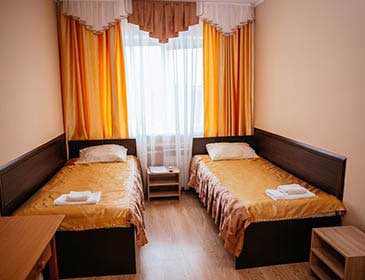
Many universities offering MBBS in Russia provide student hostels, often located close to academic buildings. Students should check the hostel fee, room type, facilities, rules, and availability directly with their university before arrival. These costs form part of the broader Russia MBBS fees for Indian students, although universities may charge accommodation separately from tuition.
Indian Food and Student Communities
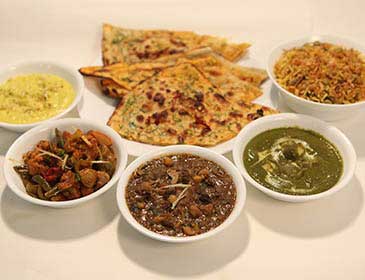
Indian students can find Indian restaurants and food options in major university cities. Indian student communities also help newcomers adjust to local life, find familiar food, and celebrate festivals such as Diwali and Holi. Students choosing to study MBBS in Russia should consider the availability of these communities when comparing universities and cities.
Sports and Libraries
The universities offering MBBS in Russia commonly provide facilities such as libraries, sports halls, gyms, and recreational spaces. Students can use these facilities alongside their academic schedules. When comparing the best MBBS colleges in Russia for Indian students, students should consider campus facilities alongside academics and clinical training.
Weather and Transportation
Russia has much colder winters than most parts of India. Moscow and Saint Petersburg can experience winter temperatures below 0°C, with temperatures sometimes reaching around -10°C to -20°C during colder periods. Students who wish to pursue MBBS in Russia should prepare with proper thermal layers, insulated jackets, winter boots, gloves, and other cold-weather clothing.
Public transportation, including buses, trams, metro systems, and trains, provides practical ways to travel around many Russian cities.
Safety and Cultural Adjustment
Students should follow university safety guidelines, respect local laws, and remain aware of their surroundings, especially when studying MBBS abroad. Learning basic Russian can make everyday communication easier and help students interact with local residents and healthcare staff while pursuing MBBS in Russia.
After completing MBBS in Russia, graduates can pursue medical practice in India, continue medical training in Russia, seek licensing in another country, or move into non-clinical healthcare careers. The pathway depends on the country where you want to work, because each regulator sets its own registration, examination, internship, and postgraduate requirements.
Yes, you can practice medicine after MBBS in Russia, but a Russian medical degree does not automatically grant permission to practice medicine in India. Under the NMC Foreign Medical Graduate Licentiate (FMGL) Regulations, 2021, an FMG seeking permanent registration in India must meet several conditions.
Key NMC Requirements for MBBS in Russia

Yes. Graduates can explore postgraduate medical education or specialization in Russia, subject to the university's admission criteria and Russian regulatory requirements. Options after doing MBBS in Russia can include clinical specialties and other postgraduate medical pathways.
Students should check the current requirements directly with the relevant Russian university and authorities because postgraduate admission, language requirements, licensing, and clinical practice rules can differ from undergraduate MBBS in Russia.
Yes, you can work as a doctor in other countries after completing MBBS in Russia. However, each country has its own licensing pathway. An MBBS-equivalent medical qualification from Russia does not automatically provide a license to practice elsewhere.
Graduates may need to complete:
Students planning international careers should research these requirements before admission, alongside Russia MBBS fees and the MBBS duration in Russia.
An MBBS in Russia degree can also support careers beyond direct patient care. Graduates can explore:
Therefore, the career outcome after studying MBBS in Russia depends not only on the university but also on your intended country, licensing pathway, postgraduate plans, and professional goals. Students comparing the best MBBS colleges in Russia for Indian students should consider these long-term career requirements alongside tuition and clinical training.
MBBS in Russia, Georgia, Kazakhstan, Uzbekistan, and Kyrgyzstan all attract international medical students, but their programs differ in tuition, duration, teaching language, clinical exposure, living costs, and regulatory requirements. Students should compare the complete education and licensing pathway rather than choose a country only because of lower Russia MBBS fees or shorter MBBS course duration.

Author Email: studytutelage@gmail.com Contact Number: +91-9667 667 331

It's a good opportunity for each and every student, the most beautiful thing is about the management and the staff interacting, and their valuable guidelines for youths, as I'm a part of this, I had got some insights from them, Tutelage Study that helped me to plan for my life vision, and to achieve my Goals to do MBBS in my dream University Kazan State Medical University of Russia. The environment and the skill of guidance is the most attractive thing for me and their plans for other students are outstanding.
My experience with Tutelage Study was amazing. The procedure was hassle-free and I did not even need to their office once. My Counselor Mr. Gaurav yadav was Kind and helpful from the start till the end. I received my offer letter from Crimea federal University and Visa for the fall 22 intake for Russia