08 Aug, 2026, Ashutosh, Mbbs Abroad
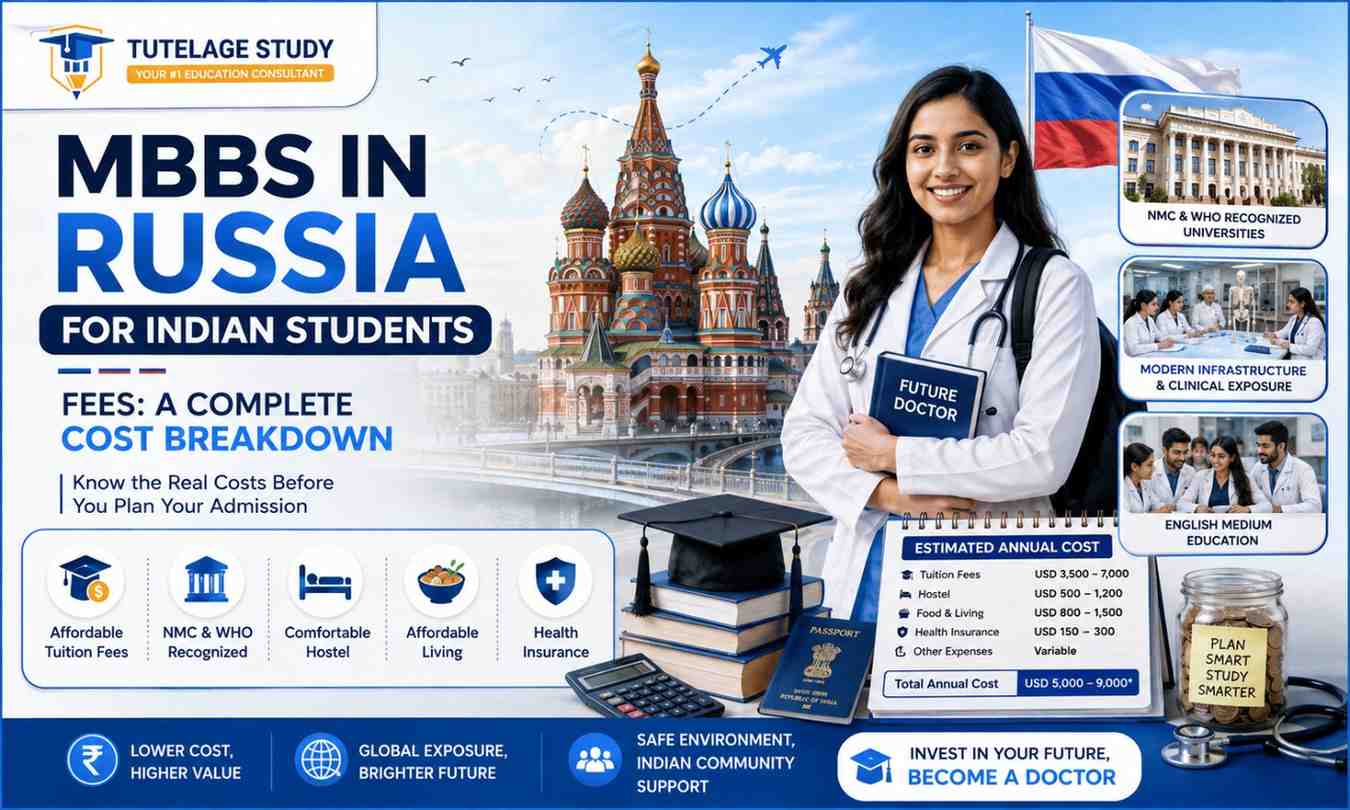
The appeal isn't just about saving money, though that's a big part of it. Russian medical universities have decades of experience training international students, many of their programs are taught fully in English, and admission doesn't hinge on a brutal cut-off race the way it sometimes does in India. For a student who has cleared NEET but missed a government seat by a few marks, that difference matters a lot, and it's often the first thing that makes Russia MBBS fees for Indian students look genuinely attractive compared to a management quota seat back home.
Unlike domestic private colleges, where a low rank can mean paying several times the standard fee just to secure a seat, Russian universities generally require only a qualifying NEET score. There's no bidding war for seats, and merit-based admission means the fee stays fairly consistent for most applicants rather than fluctuating based on how desperate the competition gets that year.
A cheap degree is worthless if you can't practice medicine with it back home. That's why checking NMC (National Medical Commission) listing and WHO recognition should come before comparing any fee chart. Most established Russian medical universities appear on the NMC's approved list, which means graduates can sit for the licensing exam and eventually practice in India — a detail that should influence your shortlist just as much as price does.
When people talk about Russia MBBS fees for Indian students, they usually mean the annual tuition figure quoted on a university website. That number typically falls somewhere between USD 3,500 and USD 7,000 per year, and it varies based on the city, the university's reputation, and how developed its clinical infrastructure is.
| University | City | Approx. Annual Tuition (USD) | Approx. 6-Year Total (USD) |
|---|---|---|---|
| Kazan Federal University | Kazan | $4,500 | $27,000 |
| Volgograd State Medical University | Volgograd | $4,000 | $24,000 |
| Crimea Federal University | Simferopol | $3,800 | $22,800 |
| Sechenov Moscow Medical University | Moscow | $6,500 | $39,000 |
| Orenburg State Medical University | Orenburg | $4,200 |
$25,200 |
These are approximate figures, and they shift slightly year to year with currency movement and university fee revisions, so always cross-check with the admission office or your consultant before you commit to a particular college.
A university sitting in a major city with modern teaching hospitals will naturally charge more than one in a smaller regional town. That doesn't automatically mean the expensive option is better — smaller-city universities often have smaller batch sizes and more hands-on clinical exposure, which some students actually prefer over the crowded lecture halls of a metro campus.
This is where a lot of students get their budgeting wrong when they first calculate MBBS in Russia for Indian students fees. Tuition is only one line item; there's a whole second layer of expenses that rarely gets mentioned upfront.
Add these to tuition, and your realistic annual spend usually lands somewhere between USD 5,000 and USD 9,000 — still far below what most Indian private colleges charge, but not the bare-minimum figure often advertised in marketing material.
First-year students almost always spend more than they expect, mostly because they haven't yet learned where to shop, what's cheap locally, or how to cook efficient meals. By the second year, most students report their monthly food spending drops noticeably once they settle into a routine and figure out the local markets near campus.
Location changes your budget more than most applicants realize. Russia medical college fees and, more importantly, the cost of living around them differ quite a bit between Moscow, St. Petersburg, and the smaller regional cities where a large number of Indian students actually study.
| City Type | Rent (Shared Hostel) | Food (Monthly) | Local Transport | Monthly Total Estimate |
|---|---|---|---|---|
| Metro Cities (Moscow, St. Petersburg) | USD 100–150 | USD 120–180 | USD 20–30 | USD 240–360 |
| Tier-2 Cities (Kazan, Volgograd, Orenburg) | USD 50–90 | USD 80–120 | USD 10–20 | USD 140–230 |
If your priority is keeping total spend as low as possible while still studying at an NMC-recognized institution, tier-2 cities are usually the smarter pick. You get the same curriculum and degree value, just without the metro-city rent and lifestyle costs stacking on top of it. Many consultants specifically steer budget-conscious families toward these Russia medical college fees brackets for exactly this reason.
Once a student has shortlisted a university based on MBBS in Russia for Indian students fees and recognition status, the actual admission process is fairly linear compared to the Indian counselling system.
Most universities process applications within two to four weeks, followed by an invitation letter that's needed for the student visa. Once the visa is stamped, students usually travel in batches between August and October, ahead of the academic session starting in September.
Something students rarely factor in is the rupee-to-dollar exchange rate. Fees are quoted in USD but paid in INR, so a weak rupee year can quietly push your effective cost up even if the university hasn't changed its official fee at all. It's worth building a small buffer into your annual budget specifically to absorb this kind of swing, rather than planning around the exact figure on the fee receipt.
Put side by side, the gap becomes obvious. A private medical seat in India can cost anywhere from roughly INR 60 lakh to well over INR 1.5 crore for the full course, often with no certainty of getting the seat you want. The full picture of MBBS in Russia for Indian students fees — tuition plus six years of living expenses — usually comes in between INR 25 lakh and INR 40 lakh.
That gap is exactly why so many NEET-qualified students who miss a government seat end up seriously considering Russia. The savings are real, provided you stick to a properly NMC-listed university rather than chasing the cheapest option you can find online.
Georgia, Kazakhstan, and Kyrgyzstan are often mentioned alongside Russia in the same budget-friendly bracket. Fee-wise, they're broadly comparable, but Russia tends to have a longer track record with Indian students, more established alumni networks, and a wider spread of NMC-recognized universities to choose from.
A number of Russian universities offer partial scholarships to students with strong academic records or high NEET scores, sometimes cutting tuition by 10–25%. These aren't always advertised clearly, so it's worth directly asking the university's international office — or your consultancy — whether anything is currently on offer before you finalize admission.
A lot of the financial stress students face midway through the course comes from a handful of avoidable planning errors.
Before signing off on any admission offer, it helps to get a few things confirmed in writing rather than relying on verbal assurances during a counselling call. Ask specifically whether the quoted MBBS in Russia for Indian students fees figure includes hostel charges or lists them separately, since some universities bundle the two while others don't. Also confirm whether the fee is locked for all six years or subject to annual revision, because a university that revises tuition upward every year can end up costing noticeably more than the first-year figure suggested.
It's equally worth asking about the refund policy in case a student needs to discontinue the course, and whether the university provides an official fee receipt that Indian banks will accept for education loan documentation. Families relying on an education loan should get this paperwork sorted early, since loan disbursement timelines don't always match university payment deadlines.
A few habits, followed consistently over six years, genuinely add up:
Beyond the numbers on a fee chart, day-to-day life plays a real role in how comfortably you manage your budget. Most Russian universities house international students in dedicated hostels close to campus, and Indian student associations are active on nearly every campus that has a sizeable batch. These associations often help newcomers find affordable grocery stores, share notes on cooking Indian meals with local ingredients, and generally ease the culture shock that hits hardest in the first couple of months.
Winters are long and can be a genuine adjustment for someone who has never lived through sub-zero temperatures. Budgeting for proper winter clothing in your first year — even though it's a one-time cost — is something students frequently forget when they're only focused on tuition and hostel numbers.
Officially, international student visas in Russia come with restrictions on part-time work, so this isn't a reliable way to offset your MBBS in Russia for Indian students fees the way it might be in some Western countries. It's better to plan your finances assuming no outside income during the course, rather than counting on part-time work that may not materialize.
The MBBS program in Russia typically runs for six years, including a mandatory internship component, and the clinical exposure is generally hands-on from the third year onward. Students rotate through affiliated teaching hospitals attached to the university, which is where the smaller batch sizes at tier-2 city universities often become a genuine advantage — more direct patient interaction per student compared to a crowded metro-city hospital ward.
Once you graduate, the next step is clearing India's licensing exam before you can practice. This exam has changed names and formats over the years, so it's worth checking the current requirements closer to your graduation date rather than relying on information from when you first enrolled. Coaching for this exam is a separate cost that some students start budgeting for in their final year, alongside their regular MBBS in Russia for Indian students fees payments.
This path tends to make the most sense for students who have cleared NEET but couldn't secure a government seat, and whose families have already priced out private Indian colleges and found the numbers unworkable. It's less about Russia being universally "the best" option and more about it offering a realistic, recognized, and financially manageable middle ground between an unaffordable private seat and giving up on medicine altogether.
If that description fits your situation, the next practical step is shortlisting two or three NMC-listed universities, requesting their current fee structure in writing, and comparing it against the ranges covered in this guide before making a final decision.
Understanding the full picture of MBBS in Russia for Indian students fees — not just tuition, but hostel, food, insurance, and city-based living costs — is what actually lets you plan realistically instead of being blindsided later. Russia continues to be a strong, credible option for students who want a genuine medical education without the financial strain that private Indian colleges often bring, as long as you choose an NMC-listed university and budget with a bit of room for currency swings. Whatever university you eventually choose, treat the MBBS in Russia for Indian students fees figure as a starting point for your planning, not the final number.
Yes. An MBBS degree from Russia can be valid in India if the medical university is listed with the National Medical Commission (NMC). Graduates must also clear the required Indian licensing examination before practicing medicine in India.
The overall cost of MBBS in Russia, including tuition, hostel, food, and insurance, is generally around INR 25 lakh to INR 40 lakh for six years. The exact cost depends on the university, city, and lifestyle expenses.
Annual tuition fees at Russian medical universities generally range from USD 3,500 to USD 7,000, depending on the university, location, reputation, and clinical infrastructure.
Students should budget for hostel accommodation, health insurance, food, transportation, and daily living expenses. Hostel costs are approximately USD 500–1,200 per year, while insurance may cost around USD 150–300 annually.
Yes. Indian students generally need a qualifying NEET score to apply for MBBS admission in Russia. Unlike some private medical colleges in India, Russian universities generally do not require donation or capitation fees.
Tier-2 cities such as Kazan, Volgograd, and Orenburg are generally more affordable than Moscow and St. Petersburg. Lower hostel, food, and transportation costs can significantly reduce the overall budget.
The MBBS program in Russia typically takes six years, including a mandatory internship component. Clinical exposure generally becomes more hands-on from the third year onward.
Some Russian medical universities offer partial scholarships or fee concessions to students with strong academic performance or high NEET scores. These may reduce tuition fees by approximately 10–25%, depending on the university and available scheme.
International student visas in Russia have restrictions on part-time employment. Therefore, students should not depend on part-time work to fund their MBBS education and should plan their finances assuming no outside income.
Students should verify the university's NMC listing, current tuition fees, hostel charges, fee revision policy, refund policy, official fee receipts, and overall living expenses. It is also advisable to obtain the complete fee structure in writing before confirming admission.